
Hospitals and gardens are a natural pair. Why? Because a garden can help a hospital fulfill its mission and responsibilities in so many ways. If hospitals maintained or partnered with local gardens, they would benefit from a nutritious and local food source (resulting in a low/zero carbon footprint), patients and healthcare workers spending time outside, developing community, and overall contributing to preventative medicine.
Sometimes “innovation” isn’t shiny, new, or high-tech.
Hospitals are usually full of that kind of stuff, but now healthcare needs to commit that ingenuity to how they deliver nutrition to their patients. It’s no secret that America has a problem with malnourishment in the first place; in fact, 30 to 50 percent of patients who enter a hospital are considered malnourished before they even walk through the door. Reports from the USDA show that around 19 million Americans/6.2% of the population have limited access to grocery stores and supermarkets. These often disproportionately marginalized groups in society live in what are called “food deserts.”
The food patients receive while they’re in the care of hospitals doesn’t exactly inspire the perfect picture of health…or taste. This overlooked part of our healthcare system results in over 80,000 hospital meals uneaten per day.
Typically, hospitals buy either microwavable food (not inspiring) or get their food delivered from miles and miles away (carbon footprint of transportation + not very fresh food). The food isn’t up to scratch either way in most cases, so it gets thrown away in landfills and leaks methane gasses into the atmosphere.
Okay, so I’m not here to make a Seinfeld-esque joke about bad hospital food. The capitalization of the healthcare industry is to blame here, not the cafeteria workers. We can slowly change the history of capitalization and monopolization of the healthcare industry. What matters is how hospitals make their decisions and exercise what power they do have.
The Affordable Care Act mandates that hospitals provide preventative care. A produce garden is that and so much more.
There are only an estimated 110 healthcare-based gardens in America so far, with the Midwest leading the charge. Since there are about 6,000 hospitals spread across America, that means there is a ton of room for improvement.
Gardens have aptly been described as “infrastructural assets” to hospitals–but really, that’s a fancy way of saying gardens and hospitals pair naturally together. Our first medicines came from the earth, right? Plants drive our medical innovations, and they contribute to healing in more than one way.
Practice Greenhealth is the leading membership and networking organization for sustainable health care. Their partnerships with hospitals across the US increased from 13% to 26% between 2008 and 2016.
One of Practice Greenhealth’s partners is the Boston Medical Center. Their luscious rooftop garden was designed by Recover Green Roofs.
Boston Medical Center’s rooftop garden grows fresh produce for patients, cafeterias, the Demonstration Kitchen, and the Preventative Food Pantry. Higher Ground Farm manages day-to-day operations and helps harvest produce for the hospital’s community.
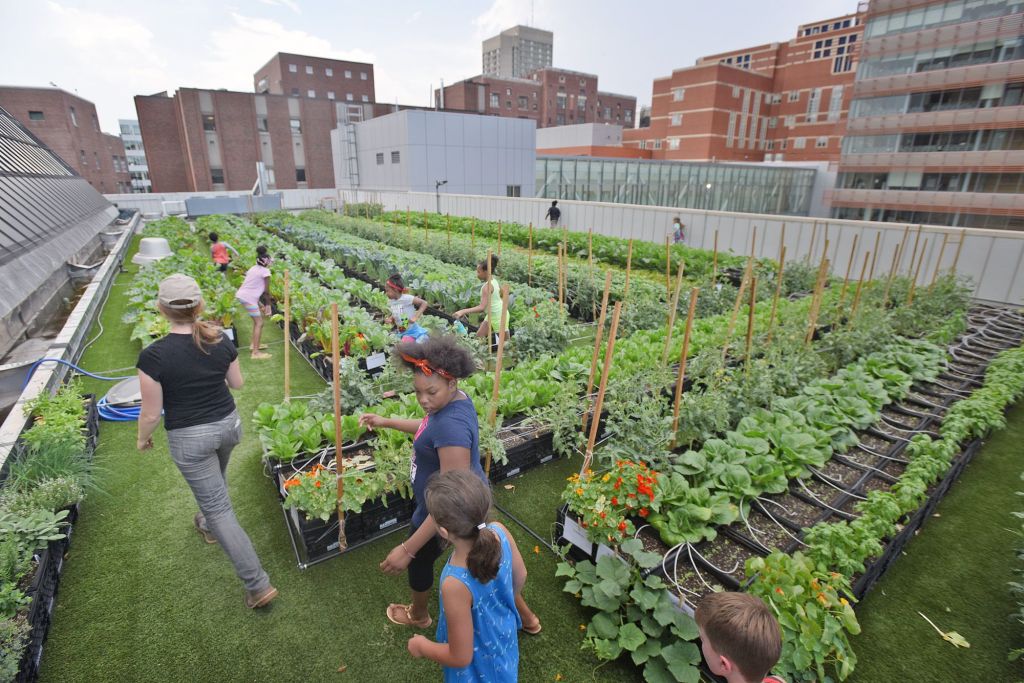
This garden saved BMC about $10,000 that it would’ve otherwise paid to external vendors. Now, their community has access to fresh, nutrient-dense, locally-grown food! The Preventative Food Pantry is like having a doctor write you a prescription for a pharmacy full of leafy greens.
People living in the poorest areas of the US have two and a half times the exposure to fast-food restaurants compared to those living in the wealthiest areas. Fast food is affordable, but it doesn’t make for a thriving lifestyle in the long term. Everyone has the right to be able to pursue happiness and healthfulness in their own community.
Even in urban areas, opportunities for homegrown produce are absolutely within reach. How? There are potential gardens all around us–up on the rooftop, like the BMC, or on your front lawn.
NASA scientists estimated that about 128,000 square kilometers of lawn exist in the US. When you put it like that, Americans have prioritized lawns as the number one irrigated crop in the country.
Lawns should be replaced by gardens if we want to deeply improve our communities from the ground up. And that unappetizing hospital food can be replaced by beautiful, homegrown produce if hospitals–and all of us–expand their view of preventative care.
The privileged have access to the newest “superfood,” while most people can only afford a family combo at the nearest drive-thru. It’s not right. We all deserve nutritious food. In America, we treat the symptoms if at all; but we need to focus more on all-around healthfulness in every neighborhood, not just the wealthy ones.
Another hospital that’s tackling health and wellness right on campus is Trinity Health Michigan, here in Ann Arbor, Michigan. It’s actually believed to be the first hospital-based farm in the state of Michigan, serving their community by improving access to fresh food, nutrition education, and food security.
“We get many consultation requests from patients hoping to lose weight and begin living healthier lifestyles,” says Lisa McDowell, Registered Dietitian Nutritionist and Lifestyle Medicine Practitioner at Trinity Health Lifestyle Medicine. “Opening a farmer’s market featuring home-grown produce is a great way to enhance the healthy eating habits of people in our community.”
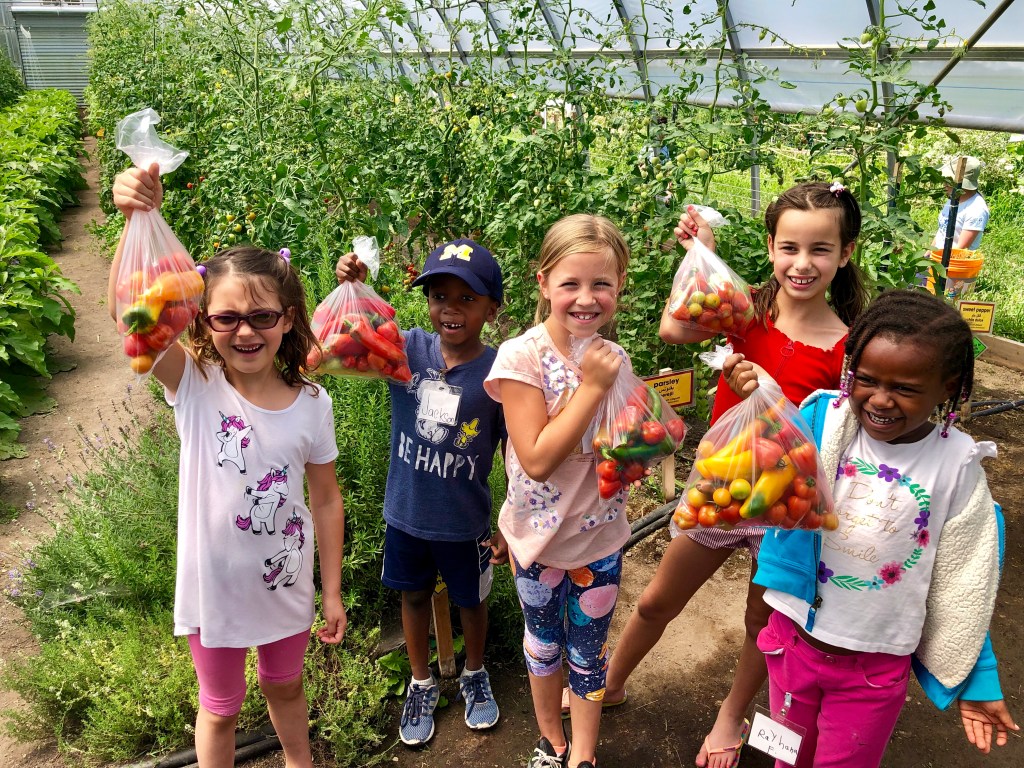
The Farm Share at Trinity Health is a collaborative community-supported agriculture (CSA) program that sources produce from local farms, providing weekly boxes of fresh greens to more than 600 households in 2022. 155 of those households received their boxes for no charge because of their eligibility for assistance. 13,479 boxes of produce were cultivated in their community for their community. Overall, 80% of what is produced at the Farm is donated to the patients. How incredible is that?
In 2021, their Ypsilanti site opened the Food Hub building, where the weekly boxes are packed and stored. This is also where the community gathers for events like cooking and nutrition classes, providing space for the celebration of locally grown food.
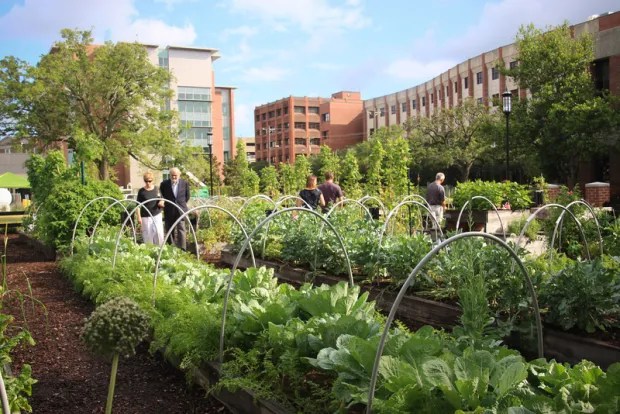
The Healthcare Anchor Network was created in 2017 to fight economic and racial inequities in healthcare. More than 70 hospitals and health systems, including Michigan’s Trinity Health and Henry Ford, have joined together to make positive and long-lasting impacts on their communities. With group efforts like these sweeping across our country, people are making huge gains in the fight for food justice.
Pairing hospitals and gardens together is just one step. Yes, there are challenges to creating new approaches to healthcare and hospitalization. But we’re going to get our hands dirty and make it happen because the results are in: this is what we all need. We can all do better, and we all deserve better.
So let’s dig up our lawns and use our water more carefully. Let’s find green spaces that can help us thrive if we do the same for them. Let’s go above and beyond the traditional hospital model we’ve used for years. Many issues we face in our society clash at intersections, so we need an intersectional approach to these systemic problems–in this case, combining agriculture, food security, and health for a brighter, greener future for all.


Leave a comment